👉Communicative area: discussing the qualities making
a person a polymath; reading for gist and for detail,
retelling
👉Active vocabulary: word-building prefixes inter-, post-, re-, co-, em-: postmodern, to reprint, interplanetary, co-author, to embody


Text A
Brian May, the founder of the legendary British glam rock band Queen, is keen on stars. Not Hollywood Walk of Fame stars, but the much larger, more beautiful ones. Best known as Queen’s lead guitar player, May wrote We Will Rock You, Who Wants to Live Forever, I Want It All; sang the bass parts on Bohemian Rhapsody and played that guitar solo on We Are the Champions — all hits people are still listening now. That success seems very small in the history of the universe, though. Just as his band was starting to make some noise 50 years ago, May was studying astrophysics. After taking a 30-year break to live the life of a rock god, he has completed a dissertation on interplanetary dust and earned a doctorate from Imperial College.
His doctoral thesis examines the mysterious phenomenon known as Zodiacal light that appears in the western sky after sunset and in the eastern sky two or three hours before sunrise. Many people have thought it is the first sign of morning twilight. 7 103 A Persian astronomer who lived around the 12th century referred to it as “false dawn” in a poem. Astronomers now know that Zodiacal light represents reflected sunlight shining on space debris. Brian May has also co-authored a book with a title that could pass for a Queen song: Bang! The Complete History of the Universe.
During the interview with our reporter, May wore a long black coat, white sneakers and an electric Hawaiian shirt; his hair was a kinky black mass, so he managed to perfectly embody both rock ‘n’ roller and mad scientist. “I think music is about our internal life. It’s part of the way people touch each other. And astronomy is the very opposite thing. Instead of looking inwards, you are looking out, to things beyond our grasp”, he said.
May enjoys dividing his time between the observatory and the recording studio these days. Whether he’s inspecting stars or working on his new album, he likes being called “Dr May”. As a guitarist, he uses his home-built guitar, “Red Special”. He built it with his father’s help. Guess what? It’s one of the most incredible instruments ever made!
Once a fellow-astronomer told him on a TV programme: “I don’t know any scientist who looks as much as Isaac Newton as you do”. In 2005 Brian May was made Commander of the Order of the British Empire for “services to the music industry and his charity work”. The same year, he was also voted the 7th greatest guitarist of all time. Bravo, Brian! May long live May!
1. Who is Brian May and what band is he famous for founding?
2. What are some of Brian May’s most well-known songs?
3. Besides being a musician, what scientific field did Brian May study?
4. How long did Brian May take a break from music to study astrophysics?
5. What is the focus of Brian May's doctoral thesis?
6. What is Zodiacal light, according to current astronomers?
7. Who referred to Zodiacal light as “false dawn” and when?
8. What is the title of the book Brian May co-authored that sounds like a Queen song?
9. How did Brian May describe the difference between music and astronomy?
10. What nickname does Brian May like to be called when working on his scientific pursuits?
11. What is the name of Brian May’s home-built guitar?
12. Who helped Brian May build his guitar, “Red Special”?
13. In what year was Brian May made Commander of the Order of the British Empire?
14. For what contributions was Brian May awarded the title of Commander of the Order of the British Empire?
15. What ranking did Brian May receive as a guitarist in 2005?
16. How did a fellow-astronomer compare Brian May's appearance to Isaac Newton?
Text B
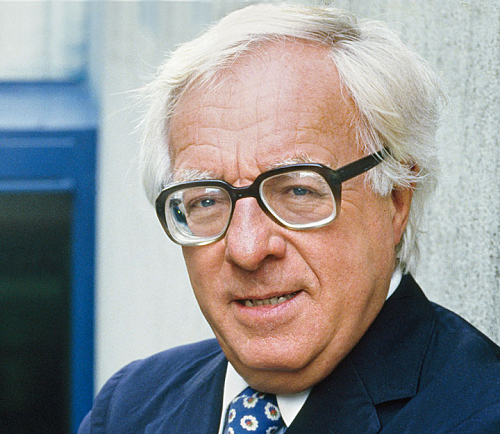
Ray Bradbury, who died aged 91, was the 20th-century American short-story writer. He was born in a small town in Illinois. In 1934 his family moved to Los Angeles, where he lived for the rest of his life. He never travelled, much preferring a bicycle to a car, and usually avoiding aircraft. Bradbury lived quietly, but remained a much-loved writer throughout his long life. He wrote, “As a result of reading science fiction when I was eight, I grew up with 104 an interest in music, architecture, city planning, transportation, politics, ethics, aesthetics on any level, art … it’s just total!”. 
The attitudes they shared were childhood nostalgia and futuristic utopianism, so, naturally, Disney invited Bradbury to consult on the 1964 World’s Fair in New York.
Bradbury thought deeply about the influence of our housing designs on how we live, not just as individuals but as a society. As a result, another Bradbury’s idea was to use giant shopping malls to save American cities from decay. He was recruited as a consultant by architect Jon Jerde – now one of the world’s leading mall designers – on some of his early projects. Bradbury advised on the postmodern Horton Plaza in San Diego and laid the foundation for the Glendale Galleria shopping centre in Los Angeles. He thought that the city did not have enough central meeting points, like, for example, the outdoor restaurants in Paris. In his opinion, these places should have enough tables and chairs for people to chat with their friends, and they should house restaurants, bookshops, cinemas and coffee shops surrounding what he called “the conversation pit”. He also noted that the area should be open until at least 11 p.m. because of our busy working schedules.
However, first and foremost Ray Bradbury was a science fiction writer. The things you can read about in his books are Martians, robots, dinosaurs, mummies, ghosts, time machines, rocket ships and carnival magicians. His work inspired writers and filmmakers like Stephen King, Steven Spielberg and James Cameron, and helped transport science fiction out of the pulp magazines into the mainstream.
1. When did Ray Bradbury die, and how old was he?
2. Where was Ray Bradbury born?
3. To which city did Bradbury’s family move in 1934, and where did he live afterward?
4. What means of transportation did Ray Bradbury prefer, and which did he generally avoid?
5. According to Bradbury, what influenced his interest in topics like music, architecture, and city planning?
6. What is the title of Ray Bradbury’s most famous novel?
7. Which collection of stories made Ray Bradbury world-famous?
8. In addition to writing books and stories, what other area did Bradbury influence, particularly related to urban development?
9. How did Bradbury’s friendship with Walt Disney influence his interests?
10. What event did Disney invite Bradbury to consult on in 1964?
11. What urban trend did Bradbury influence with his ideas about shopping malls?
12. Which architect recruited Bradbury as a consultant for shopping mall projects?
13. Name one shopping mall project Ray Bradbury advised on.
14. What did Ray Bradbury think cities needed more to improve social interactions?
15. What is “the conversation pit” that Bradbury described?
16. Why did Bradbury believe shopping centers should stay open until at least 11 p.m.?
17. What are some subjects and themes explored in Bradbury’s science fiction stories?
18. What filmmakers and writers were inspired by Ray Bradbury’s work?
19. How did Bradbury help change the perception of science fiction in popular culture?

No comments:
Post a Comment